
Call us now :08071931980
 Send Inquiry
 Send Inquiry
Air Ring Gauges With Setting Plugs
Price 1 INR/ Set
MOQ : 1 Set
Air Ring Gauges With Setting Plugs Specification
- Measuring Range
- 3 mm to 100 mm (custom on request) Rankine
- Outer Size
- Diameter as per measured job, typically 16-60 mm
- Sensor Type
- Pneumatic (Air) Sensor
- Display
- External dial or electronic readout (air comparator required)
- Frequency
- NA (non-electrical) Hertz (HZ)
- Case
- Hardened Steel body
- Thread
- Standard and custom threads available for fittings
- Material
- High-grade Tool Steel with rustresistant finish
- Working Presssure
- 0.4 to 0.6 MPa (standard pneumatic gauge pressure)
- Seal Material
- Precision ground, lapped surfaces
- Grade
- Precision Grade
- Application
- Other
- Accuracy
- Up to 0.001 mm (1 micron) gm
- Temperature Range
- Standard: 10C - 40C operating, best results at 20C
- Suitable For
- Automobile, aerospace, precision engineering industries
- Setting Plug Material
- Hardened Gauge Steel or Tungsten Carbide (as per specification)
- Air Connection
- Standard quick coupling or threaded connection
- Package Includes
- Air Ring Gauge, Matched Setting Plug, Calibration Certificate
- Calibration
- Provided with traceable calibration certificate
- Setting Plug Tolerance
- As per IS/ISO standards (selectable as Go, No-Go, or Master Setting Plugs)
- Repeatability
- 1 micron
- Number of Jets
- 2 jets (opposed, for diameter measurement)
- Finishing
- Hard chrome plated, ground and lapped
Air Ring Gauges With Setting Plugs Trade Information
- Minimum Order Quantity
- 1 Set
- Supply Ability
- 250 Sets Per Week
- Delivery Time
- 1 Week
- Main Domestic Market
- All India
Air Ring Gauges With Setting Plugs About
Inside diameter of these Air Ring Gauges And Setting Plugs is perfectly finished to gauge tolerance and to check multiple diameters of the cylindrical object at a time. Airflow via gauging surface on these products helps in self-cleaning. These products are designed with two jetted air rings to ensure easy measurement of size, taper, and ovality. Often, the provided products are hard chrome plated for increasing its wear life. These products are convenient for external diameter measurement of a shaft with low and high setting master. To manufacture these products, a team of experienced professionals uses quality assured components. The offered Air Ring Gauges And Setting Plugs have user-friendly interface, compact size, reliable performance and longer functional life.
Technical Specification
|
Country of Origin |
Made in India |
|
Packaging Type |
Box |
|
Finishing Type |
Polished |
|
Brand |
Swaroop |
|
Material |
Mild Steel |
|
Measuring Range |
2 mm - 200 mm |
|
Usage/Application |
Measurement |
High Precision Measurement
With a repeatability of 1 micron and accuracy up to 0.001 mm, Air Ring Gauges deliver reliable results for critical quality control. The precision pneumatic sensor and dual opposed jets ensure consistent diameter measurement of bores and cylindrical parts, essential for demanding sectors like aerospace and automotive manufacturing.
Robust Build and Versatile Application
Manufactured from high-grade tool steel with a rust-resistant, hard chrome-plated body, these gauges are suited to rigorous, repeated industrial use. Supported measuring ranges of 3 mm to 100 mm (with custom sizes available) and selectable setting plug materials make them adaptable to specific applications within precision engineering.
Comprehensive Package and Easy Integration
Each package includes the Air Ring Gauge, a matched setting plug, and a traceable calibration certificate for assured accuracy. Compatible with air comparators for external readout, these gauges suit quality assurance labs and shop floors alike, with standard and custom thread options available for seamless integration into existing setups.
FAQs of Air Ring Gauges With Setting Plugs:
Q: How do I use an Air Ring Gauge with a Setting Plug for internal diameter measurement?
A: Insert the Air Ring Gauge onto the cylindrical component or bore to be measured. Connect to an air comparator using the provided standard quick coupling or threaded connection. The gauges jets direct a flow of air around the part, and deviations in the air flow (measured by the comparators dial or electronic display) correspond to variations in diameter. Use the matched setting plug to calibrate the system before measurements.Q: What are the benefits of selecting Hardened Gauge Steel or Tungsten Carbide for the setting plug?
A: Hardened Gauge Steel offers excellent durability for general precision applications, while Tungsten Carbide is recommended for high-wear environments or repeated use due to its extreme hardness and longer service life. The material can be chosen based on the applications intensity and frequency of measurement.Q: When should I calibrate my Air Ring Gauge and how is the calibration certificate provided?
A: Calibration should be performed before first use, after any impact, or at regular intervals as per your quality system. Each gauge is delivered with a traceable calibration certificate, confirming conformity to IS/ISO standards. Recalibration services are recommended annually or more frequently in critical applications.Q: Where can Air Ring Gauges with Setting Plugs be applied?
A: These gauges are highly suitable for precise internal diameter measurement in the automobile, aerospace, and precision engineering industries. They are also applicable wherever close tolerance cylindrical bores need to be checked quickly and accurately in manufacturing or inspection environments.Q: What is the process for setting up and performing measurements with this gauge?
A: Begin by connecting the gauge to an appropriate air comparator and setting it up at a stable temperature (preferably 20C for best results). Calibrate using the supplied matched setting plug (Go, No-Go, or Master as required). Once calibrated, measure each part by inserting it into the gauge and observing the readout for precise, repeatable results.Q: How does the dual jet design improve measurement accuracy?
A: The two opposed jets provide a balanced, symmetrical measurement across the diameter, reducing errors due to misalignment and ensuring consistent results over repeated measurements. This contributes significantly to the high repeatability and precision grade of the gauge.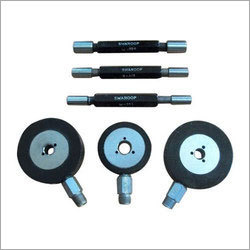
Tell us about your requirement

Price:
Quantity
Select Unit
- 50
- 100
- 200
- 250
- 500
- 1000+
Additional detail
Mobile number
Email

More Products in Air Ring Gauges Category
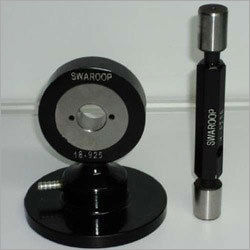
Air Ring Plate Mounted Gauge
Minimum Order Quantity : 1 Set
Thread : 1/4 BSP
Grade : Industrial
Case : Stainless Steel
Material : Stainless Steel, Brass
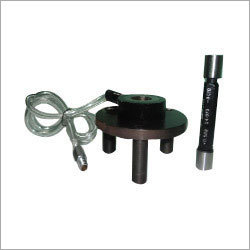
Air Ring Bench Mounted Gauge
Price 1 INR / Set
Minimum Order Quantity : 1 Set
Thread : M16 x 1.5 (example, check variant)
Grade : Industrial
Case : Mild Steel, Powder Coated
Material : Stainless Steel, Aluminum
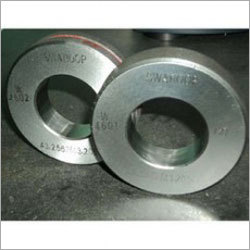
GO NO GO Ring Gauge
Price 1600-20000 INR / Set
Minimum Order Quantity : 1 Set
Thread : Metric & Inch threads available
Grade : Industrial, Precision
Case : Protective case supplied
Material : Highgrade Tool Steel, Hardened and Ground

 Send Inquiry
Our Products

PLOT NO. H-10, SECTOR-57, F.I.T., Faridabad - 121004, Haryana, India

Mr Rajiv Bharadwaj
(Director)
Mobile :08071931980
 Send Inquiry
 Send SMS
Developed and Managed by Infocom Network Private Limited.
